Posts

Showing posts with the label facilitation

How to facilitate virtually?
Image
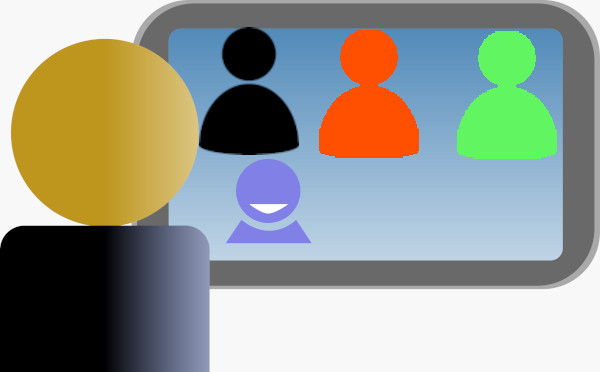
    This blog is one of a series of Facilitation Thoughts which look at various aspects of facilitation.  The Covid-19 pandemic has made it necessary to conduct different kinds of meetings online. I facilitated my first virtual session in April 2020 .  I continued to learn with each subsequent 'online' session - as a participant and as a facilitator.   These are some additional points to the Facilitation Thoughts to enhance the virtual facilitation experience. Learn/Adapt The virtual environment means that facilitators have to adapt and be creative. Working virtually means thinking of how to achieve the facilitation objectives in a  different space.    It does not mean transferring the face to face, to the computer/tablet/smart phone. For example, presenters have to check the legibility of text on their presentations. In face to face , the presentations are magnified through projectors on to a wall - in this virtual environment, th...

AntivirusGy 5: Facilitating the Zoom conversation about domestic violence

Image
I look at the small video image of me on the laptop screen and I jump.  I see that I am sitting slumped in the chair with my hands on my head. I hear the voices from adults in my young days... "take your hand down from your head and sit up".. I watch myself in the little video screen follow the instructions in my head. I am distracted for a few seconds from the voice being spoken by the screen with the red band around it The young people agreed to participate in a Zoom conversation on prevention of domestic violence.  I agreed to facilitate online.  In face to face sessions, I would be alert to safety issues for the participants, in case anyone felt the need to disclose their personal experiences with violence. Building a safe environment usually involves some meeting, introductions, facial contact and cues, setting guidelines for the room. I check all the 'teaching' tips and so to get ready. I would plan to speak for about 40 to 50% of the time, ensure t...

Training resources : Lobbying and engagement of policy makers in Guyana

Image
The National Coordinating Coalition is a group of NGOs who have organised to deal with common issues of sustainability and advocacy on common issues related to HIV/AIDS and other concerns. The NCC is implementing a project which includes an advocacy component. They have developed a comprehensive advocacy plan. I facilitated a learning session on Lobbying and Engagement of Policy Makers .  The participants indicated satisfaction with the session I  am sharing the resources used in the training. Please feel free to use and adapt. These resources would be most suitable to Guyana. There are other countries which have strict lobbying laws and regulations. Methodology The session should be  designed so as to be interactive and participatory.  The agenda should be flexible to accommodate the needs of the participants. The agenda I used was designed to answer the following questions :- What is lobbying? How does lobbying fit into advocacy objectives? What are...

What kind of follow up and other activities to close on a positive note?

Image
This blog is one of a series of Facilitation Thoughts which look at various aspects of facilitation. "I have been to many workshops like this, talk talk, promises and no action"  "Y'all never come back .. "  "You got a list of problems and issues, it was depression, you did not use the opportunity to identify solutions" The facilitator could easily become a focus for the frustrations of participants who have felt that their contributions have not been dealt with or that they have wasted their time. This is especially true for situations where 'consultations' are being held and where people are cynical about how their input would be realised. There is one session which stood out in my head in which two of the participants said they felt that I should have done more to move the discussion to solutions even though that was not an objective of the session. There should be enough time to discuss some short-terms solutions to some o...

How to report on the session?

This blog is one of a series of Facilitation Thoughts which look at various aspects of facilitation.  The facilitator should confirm the reporting requirements with the organisers.  There are some sessions which are organised for policy making or other planning activities. These kinds of sessions - consultations, planning, reviews - should have a  rapporteur. The rapporteur would be responsible for recording the questions, decisions, ideas, concerns, complaints, solutions etc discussed by the group.  There should be time for the rapporteur to check in with the participants to confirm that the reporting is accurate. Some rapporteurs might select a smaller group of the participants to review the draft  report to ensure the accuracy. If a rapporteur is not present, then the facilitator should plan time to capture summaries of the discussions and then transcribe them to the report of the session. Some persons might audio record segments of the session...

How to evaluate the session?

Image
This blog is one of a series of Facilitation Thoughts which look at various aspects of facilitation.  Evaluations are done for different reasons (apart from satisfying the organisers/donors ) and could be useful to the organisers and the facilitator. During the session, the facilitator should be constantly evaluating each segment to see if the specific objectives of each segments are being met, and changing tactics if necessary. If the session is over more than one day, it is good to do an evaluation at the end of the day. The final evaluation of the session should answer the following questions :- Do the participants feel that the session met its objectives? How was the process? What worked? What should have been done differently? Was the content enough to meet the objectives? What did the participants learn? What are some of the follow up actions? These are some ways to evaluate a session :- Use a case study/role play simulation to check on the knowledge ...

What kind of technology to use?

Image
This blog is one of a series of Facilitation Thoughts which look at various aspects of facilitation.  Images edited from http://www.openclipart.org A facilitator could use technology to present information and to record and report proceedings from a group discussion. The following technologies are most used  - sometimes together :- Black board and chalk - coloured chalk is good White board and markers - many colours Flip chart/Newsprint and markers and tape to paste the flip chart paper Multimedia Projector/laptop and screen, with speakers to show video Microphones (A note about newsprint : I find that I restrict myself when using the expensive flip chart pads with the lovely white paper. I prefer to use newsprint - made out of recycled paper and usually available at much lower cost  ) The facilitator should choose technology which is easy to use and which suits the room and the number of persons. These are some random thoughts about the technolog...

How to manage boredom ?

Image
This blog is one of a series of Facilitation Thoughts which look at various aspects of facilitation.  Image edited from http://www.openclipart.com " There should have been more games to liven things up" (Young person)  "The best part for me was the games" "There was too much group work " "I am surprised that I did not fall asleep, I usually fall asleep during these workshops" "The session was not as hot as the previous one " People express boredom and their lack of interest in the discussion in different ways. I think a facilitator should empathise with any person who seems bored or distracted. When I am bored or distracted in a session, I tend to day dream. I tune out of the proceedings. I might ask for an excuse to leave the room and go for a stretch. I read the handouts, or sometimes engage in side conversations. I sometimes will nod to pretend I am engaged. Out of politeness, I will fix my eyes on the spe...

What to eat during a session?

Image
This blog is one of a series of Facilitation Thoughts which look at various aspects of facilitation.  Images from http://www.openclipart.com A facilitator who does health promotion sessions noted the irony of doing the sessions when the food which was served was not what she considered healthy. As a result, she started to make recommendations for the menu. Another facilitator has some recipes for the kind of coffee break food she recommends ' high energy, low sugar, low fat '. In Guyana, lunch can be on the heavy side of carbohydrates. Some persons could be inclined to doze off during the afternoon sessions. A facilitator usually does not have to get into the logistics of the catering and food arrangements. However, schedules would have to be adjusted if the food is late. Participants could also feel dissatisfied if the food is not satisfactory. It is important to check on dietary requirements before a session starts. Not every organiser does this so the facili...

How to manage time?

Image
This blog is one of a series of Facilitation Thoughts which look at various aspects of facilitation.  "We did not have enough time.. " One of the indicators that people are enjoying a session is the realisation that time has run out, and people agreeing to extend the time. The facilitator is responsible for keeping time. It is good to calculate the time for each activity during the planning. I use the following guides :- Introductions - 10 minutes for any preparation/ice breaking activity and 30 to 40 seconds per person to speak. Buzz Groups - 5 minutes with 2 minutes per group for feedback Vignettes - 10 minutes  with 3 minutes per group for feedback Case Study analysis - 15 minutes, with 3 to 5 minutes per group for feedback Other group activity - 20 minutes to 30 minutes, with a 15 minutes for plenary Role play simulations - 15 to 20 minutes to prepare,  5 minutes per group Closing evaluation , verbal feedback - 1 minute per person Specific pres...

How to listen?

Image
This blog is one of a series of Facilitation Thoughts which look at various aspects of facilitation Listening model learned from http://www.barefootguide.org Listening is half of communication and successful facilitators practice good listening skills. Listening is probably the most difficult part of facilitation. Good listening skills are usually taught to counsellors and others who are doing therapeutic practice.  Listening requires practice. The Barefoot Guide Connection suggests a model in which listening is done at three levels. (The detailed reading is available here or here ) "Listening for the Head" - the Thinking Level - to thoughts, facts, concepts, arguments, ideas and the principles behind these "Listening for the Heart" - the Feeling Level - to feelings, emotions, mood, experience and the values behind these. " Listening for the Feet" - the Will Level - to intentions, energy, direction, motivation...

How to get people to talk? And to shut up?

Image
This blog is one of a series of Facilitation Thoughts which look at various aspects of facilitation.  I have a memory of facing an assembly of children . The children were very well behaved and polite. I was given an hour to talk about domestic violence (I thought I had 15 minutes). I thought of asking questions and inviting responses. Every question was greeted with polite smiling faces. I moved into lecture mode and delivered a 'talk' which received polite applause at the end. The organisers asked for a review meeting that evening 'to find out what had gone wrong'... A facilitator has to create the environment for equal participation from all the persons - through talking or other forms of expression. One common thread of positive evaluation is when the participants felt that they had good interactions and their contributions were valued. Some of the ways to create an environment for good interaction are :- Establishing a participation contract at th...

What happens when people bring their children?

Image
This blog is one of a series of Facilitation Thoughts which look at various aspects of facilitation.  ( Image from http://freedesignfile.com/11995-playing-children-cartoon-vector-set-04/ ) "They really should not have children in the workshop. If so, they should be fed as well” evaluation comment There are some kinds of sessions (including classes) in which the participants have to bring the small children in their care.  I have a memory of an lifting up a child and running a session for about 20 minutes until the child fell asleep. The small child was bored and his mother put him down to walk around. I was facilitating and he came to me and started pulling at my shirt and raising his hands.  I am not 'good' with children but still lifted him and then he fell asleep. His parents kept smiling at me. I have had to decide not to use a video during a training session because small children were present.  In a human right session, the time when a parent start...

How to get to know who is in the group?

Image
This blog is one of a series of Facilitation Thoughts which look at various aspects of facilitation. There are different ways to get to know the people in the group you will be facilitating. A perfect session would have enough time for introductions . There might be cases where the number would be too large and the time would run out soon after the introductions. It is good to think about why you want to know the people in the group and what you want to know about them.  Introductions help to :- get people to talk - and to animate a room. People also get to know each other a bit so that limits the fear of speaking in front of 'strangers'. allow the facilitator to learn who is in the room and get an idea of the experience and interest about a topic give the facilitator some idea of who might have interesting perspectives on a topic. A recent workshop on gender equality for example had two participants who worked in exclusively female oriented and male oriented  ...

What to wear? - Preparing for the session

Image
This blog is one of a series of Facilitation Thoughts which look at various aspects of facilitation.  "Vidya's appearance was a disgrace. He should comb his hair, shave , put his shirt in his pants. He is no representative for Hindus..,. and it distracted from what he had to say" Participant's evaluation comment "Vidya was good but he should pay attention to his dress" Another evaluation comment at the same session What to wear? Sunday afternoon domestic violence training. The facilitator, an experienced social worker , in Church clothes. She then takes off her shoes and says.. Good Afternoon, I look forward to the session, I am taking off my shoes because I am more comfortable barefoot" A lesson learned early on in facilitating work is that in Guyana and the Caribbean impressions are formed by dress. Dress too much and there is a barrier and dress too little there is another kind of barrier formed. And so I go through in my...

How to plan and set the agenda for a session?

Image
This blog is one of a series of Facilitation Thoughts which look at various aspects of facilitation.  "Plan and prepare well and then surrender to the moment, knowing that it is a learning experience for both you and the participants" Rolinda Kirton There are different ways to plan for any kind of session (workshop, discussion, etc).  The following questions in my experience guide the planning :- Why is the session being held? What can we assume about the people who are coming to the session? What do we know about the age group, ability, literacy level and  prior knowledge of the topic or issues? What are the prerequisites for persons to participate in the session? How many persons are expected to attend? What are the objectives (learning objectives if an orientation or training session) and expected outcomes of the session? How much time is available for the session? What resources are available - budget, equipment etc ? What kind of activities will...

What are the characteristics of a (good) facilitator?

Image
This blog is one of a series of Facilitation Thoughts which look at various aspects of facilitation. What makes a good facilitator? Different people have different styles and some qualities are needed more in certain settings. A good facilitator has to communicate well. It sounds cliche, but the ability to speak clearly AND to listen well are important. Speaking clearly which means using words which the participants would understand and listening which reflects what is being said. In Guyana, creolese should be freely used and accepted in most parts of the coast.  Juliet Solomon worked as a community facilitator in Guyana's hinterland and noted that 'creole' is not often spoken there. Some of the other characteristics are described here. Empathy Empathy is demonstrated in understanding that people have different experiences and ideas. Some sessions are organised, eg domestic violence, child abuse prevention, to change behaviours and ideas, and empathy helps...